
From Order Confirmation to Container Loading
When will the tyres be ready? When can the container be loaded? And when is the vessel scheduled to depart? These are three separate milestones in a truck tyre shipment. For importers and dealers, keeping track of each one makes it easier to plan stock arrivals and follow up when a schedule changes.
Confirm the order details
Before preparing the goods, the buyer and supplier agree on the tyre brand, sizes, tread patterns, ply ratings and quantities. These details are usually recorded in the pro forma invoice (PI), along with the agreed trade terms and destination port. For a mixed order, listing each size and pattern on a separate line gives both sides a clear reference when checking the goods.
Coordinate stock, production and booking
A mixed order may include tyres that are already in stock and others that still need to be produced. If all items are due to ship together, the loading plan depends on when the full order will be ready.

The party arranging the shipment checks available sailings and cargo cut-off times with the freight forwarder. The container loading date is coordinated around both cargo readiness and the booking. The scheduled vessel departure is a separate date and may change if the carrier updates its schedule.
Check the tyres before loading
Before loading, check the brand, size, tread pattern, ply rating and quantity against the order. This is particularly useful for mixed containers, where tyres of the same size may come in different patterns or ply ratings. Recording the quantities actually loaded by item gives both sides a reference for the shipment.
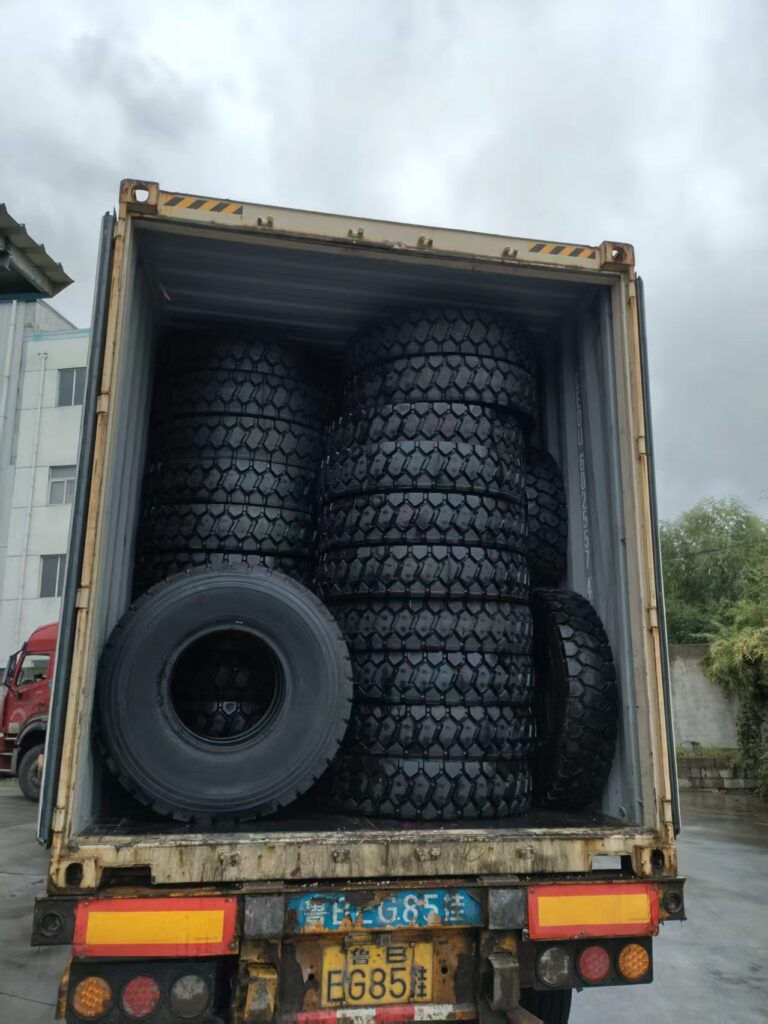
Match the documents to the shipment
Use the loading record to check that the commercial invoice and packing list reflect the goods actually shipped. Review the bill of lading draft separately for details such as the consignee and ports, and resolve any discrepancies before the documents are finalised.